Camden Town house clearance for homes, flats and other properties
Camden Town house clearance should feel organised, careful and straightforward, especially when you want rooms cleared without unnecessary disruption. We provide a clear, practical service for domestic properties in Camden Town, covering full and partial clearances, furniture removal, and the sorting of reusable and non-reusable items. The aim is to make the process manageable from the first enquiry through to the final sweep-through, while keeping the work focused on what actually needs removing.
Our service is built around the sort of varied property mix found in the area, from compact flats and maisonettes to larger terraced homes and shared accommodation. We handle the removal of general household contents, bulky furniture, white goods, and mixed items that need to be separated before they leave the property. Careful planning helps the work move smoothly, but the practical detail always comes first: access, item type, volume and the required clearance standard all shape the approach.
If you need a house clearance in Camden Town, start by deciding which rooms or items stay and which ones should go. That simple split makes it easier to plan the labour needed and the order in which items can be removed. Request a quotation when you are ready, and if you prefer, use a short note to describe the property, the rooms involved and any large or awkward items.
Domestic clearance work for occupied and empty properties

House clearance can cover many different situations, and the work needs to be matched to the condition of the property. Some clearances are carried out after a move, while others involve a home that is ready for sale, refurbishment or re-letting. We can assist with one room, several rooms or a whole property, depending on what needs to be removed and how much sorting is required before items can be taken away.
Where a property still contains a mixture of wanted and unwanted belongings, a sensible sequence matters. Items can be grouped for retention, donation, recycling or disposal before the main removal begins. This reduces confusion and helps protect items that are staying in the property. Our house clearance service is suited to customers who want a broad domestic clearance handled as a single, coordinated job rather than piecemeal removals arranged around several different visits.
For smaller homes, the work often benefits from a direct, room-by-room approach. For larger homes, a more staged plan may be useful so that access routes remain clear and heavy items can be moved safely. In either case, the objective is not just to empty space, but to do so in a way that respects the property and keeps the process as orderly as possible. If you are comparing options, think first about whether you need a partial or full clearance.
Furniture, bulky items and room-by-room removal

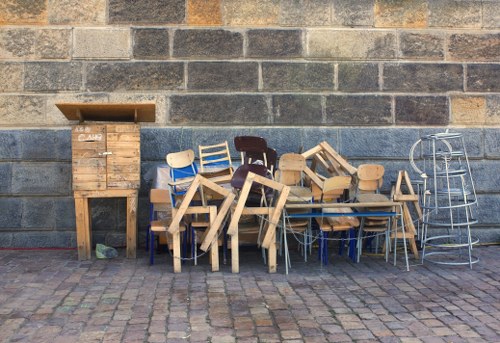
House clearance frequently involves furniture as well as smaller household contents, and each type of item can affect the method used. Wardrobes, sofas, beds, shelving, tables and chairs need to be assessed for size, condition and access before removal begins. Some pieces can leave intact, while others may need to be broken down so they can be moved safely through tight hallways, stairwells or communal entrances.
We also clear mixed room contents where furniture is only one part of the job. That can include ornaments, boxed items, general clutter, soft furnishings and miscellaneous belongings that have built up over time. When the work includes multiple item types, the clearance is usually smoother if the heavy items are dealt with first and the smaller contents are then gathered separately. For customers focused on furniture only, the dedicated furniture clearance page gives a useful overview of that narrower type of removal.
There is often more to furniture removal than simply lifting pieces out of the property. The route out, the amount of dismantling needed and the condition of the furniture all affect how the job should be approached. In some cases, individual items may be suitable for reuse, while others are better treated as disposal-only. A clear assessment helps keep the process efficient and avoids last-minute surprises on the day.
Clearance for lofts, garages and other storage spaces
Many homes need more than a standard living-room clearance, particularly when storage spaces have gradually filled with old belongings. Lofts, garages and similar areas often contain a mixture of boxes, seasonal items, old furniture, tools and long-unused household goods. These spaces can be harder to work in because of limited headroom, poor lighting or awkward access, so the removal method needs to be chosen with care.
Where a loft is involved, the first question is often whether the contents can be safely reached and carried down without damage to the property. Garages may hold bulkier and heavier items that are straightforward to identify but less easy to move. We can help clear these areas as part of a broader domestic job or as a standalone task when you only want a specific storage space emptied. The dedicated loft clearance and garage clearance pages show how those separate jobs are handled.
Storage areas can also hide mixed waste rather than ordinary household contents, so a proper survey of the items helps define the work. Where it is useful, a simple list of what is in the space can support a more accurate quotation and a better sense of the access required. That is particularly helpful when there are ladders, narrow staircases, low ceilings or detached garage structures involved.
Preparing a practical clearance brief

A good clearance brief does not need to be long, but it should be specific. The most useful details are the property type, the number of rooms, the rough volume of items and any constraints that might affect access. If you already know which larger items are staying, mention those as well, because that helps keep the plan focused on the right parts of the property and reduces the chance of unnecessary handling.
It can also help to note whether the property is occupied, empty, partly furnished or awaiting a change of tenancy. These details influence the sequence of work, especially where shared hallways, parking limits or building rules have to be considered. Our pricing and quotes information explains the kind of information that is most useful when you want a tailored estimate rather than a generic price guide.
For many customers, the simplest way to start is with a short description and a few photographs of the items or rooms involved. That is not a substitute for a proper assessment, but it can help narrow down the likely scale of the job. Ask for a quotation once you have that basic information ready, then decide whether the clearance should be arranged as one visit or divided into separate stages.
Home and house clearance options for different property sizes
Domestic clearances are rarely identical, because every property contains a different mix of items and access conditions. A house may need a full emptying after a move, while another may only require a few rooms cleared before decorating work begins. We adapt the service to the situation in front of us, so the work stays proportionate to the amount of content and the amount of labour required.
For customers with a complete property clearance in mind, the work normally includes identifying what remains, what goes and what needs separate treatment. That can be especially helpful where a property has been lived in for many years and contains a wide variety of possessions. A home clearance can suit customers who want a broader domestic service across the whole property, while a targeted job may be better if only specific rooms need attention.
Clearance choices often come down to timing, access and the extent of sorting needed before removal begins. A short visit can be sufficient for a smaller flat or a limited set of rooms, but a larger home may benefit from a more structured sequence. Thinking in terms of rooms, categories of item and exit routes usually produces a cleaner result than trying to describe everything as one broad pile of waste.
How clearance jobs are organised and carried out

Once the scope is agreed, the job can be organised around the practical steps that matter most: arrival, sorting, removal and final tidying. That sequence helps keep the clearance efficient and lowers the chance of confusion where several rooms or item types are involved. It also makes it easier to preserve anything that is meant to remain in the property while the unwanted contents are removed around it.
Some customers prefer to clear the property themselves before a removal, while others want everything handled together. The right approach depends on the volume of items, whether any objects need dismantling and how quickly the property must be made ready for its next stage. The dedicated contact us page is available when you are ready to send the details and request a quotation based on the actual work involved.
When you prepare your enquiry, it helps to mention stair access, parking or loading restrictions, and any items that may need extra care. Those details do not need to be formal, but they do make the quotation process more accurate. A concise description is often enough to begin with, and then any additional points can be added if the scope changes.
Items, conditions and decisions that affect the clearance
Every domestic clearance has a few practical decisions at its core. Large furniture may need dismantling, fragile items may need separate handling, and mixed contents can need sorting before removal. The condition of the items also matters: dry, reusable furniture can be managed differently from damaged or broken household goods, and that affects how the work is planned from the outset.
A useful way to think about the job is to separate the clearance into simple categories. A short checklist can help, especially when several rooms are involved.
- Large furniture that needs moving or dismantling
- Smaller household contents and boxed items
- Items to keep, donate, recycle or remove
- Access constraints such as stairs, lifts or narrow entrances
Where there are additional concerns, such as heavy loads, awkward items or a property with limited access, those issues should be mentioned early rather than left until the day of the clearance. It is often the small practical details that shape the whole job. When the scope is clear, the clearance can be carried out with less interruption and a more predictable outcome.
Recycling and responsible handling of cleared items
People often want to know what happens after the removal, especially when the property contains a mix of useful and no-longer-needed items. The answer depends on the condition and type of each item, as well as the disposal route that is suitable for it. Some belongings may be fit for reuse, while others are only suitable for disposal or separate processing. The important thing is that items are handled according to what they are, not treated as though every object belongs in the same category.
Where possible, sorting can reduce unnecessary disposal and make the overall process more efficient. That is one reason why a proper clearance is more than a simple loading exercise. The dedicated recycling and sustainability page covers the broader approach to handling cleared materials, while the main job still focuses on removing the contents from your property in a tidy and controlled way.
For many customers, this part of the service brings reassurance because it shows that the clearance is being considered as a whole, not only as a matter of speed. A well-managed process can be both practical and orderly, which matters in homes where some contents are being retained and others are being removed in stages. Thoughtful sorting is one of the simplest ways to keep the job under control.
About Camden Town
Camden Town is a district in north-west London within the London Borough of Camden, known for its strong association with markets, music and a lively urban streetscape. It developed rapidly in the late 18th and 19th centuries after the opening of the Regent’s Canal and the growth of the railways, which helped turn the area into a busy transport and trading corridor. The canal itself remains one of the defining features of the neighbourhood, linking the area to the wider network of waterways across London and creating a distinctive edge between streets, bridges and waterside paths. Camden High Street and the surrounding roads carry a dense mix of shops, venues and everyday services, while the market area became one of the best-known parts of the district in the 20th century. The locality also includes a number of residential streets and converted buildings, with a built environment that reflects successive phases of Victorian development, later commercial change and modern redevelopment. Nearby green spaces such as Regent’s Park and the canal towpaths give the area some relief from its busiest junctions, while Camden Lock and the surrounding markets remain major points of interest for visitors and locals alike. The result is a place that combines transport history, urban architecture, retail activity and cultural identity in a compact part of inner London.
House clearance support for moves, changes and general decluttering
Some customers need a clearance because they are moving out, while others want a property made easier to manage before renovation, letting or sale. The work can be scaled to the purpose of the job, from removing a few bulky items to clearing several rooms of accumulated contents. In all cases, a straightforward plan helps prevent items from being moved twice or left in the wrong part of the property.
We also handle clearances where the aim is simply to reduce clutter and create a more workable space in the home. That might mean removing outdated furniture, excess contents from a spare room or the kind of miscellaneous items that tend to build up over time. Flat clearance can be a useful option where a smaller property needs a compact, efficient approach, especially if stairs, shared entrances or limited circulation space make the job more structured.
When you are thinking about a clearance in practical terms, it helps to decide what outcome you want at the end of the day. Is the property meant to be empty, partly cleared or simply easier to use? That answer shapes the work much more usefully than trying to define everything by item count alone. A direct objective usually leads to a more sensible quotation and a better-organised clearance.
Requesting a quotation for your Camden Town clearance
If you are ready to move ahead, send a clear summary of the property, the rooms involved and the main item types that need removing. A good quotation depends on practical detail rather than vague estimates, so the more accurately you can describe the job, the easier it is to match the service to your requirements. If there is a deadline or building access window, include that as well.
For best results, keep the request focused on what actually needs to be done. Mention furniture, storage items, access issues and anything fragile or unusually heavy. If the job is likely to involve a full property, that should be stated plainly; if it is only a partial clearance, that is useful too. Request a quotation today when you are ready to compare the scope and plan the next step.
We aim to keep the process practical, calm and clear from the outset. Whether you are clearing a single room, an entire house or a set of bulky household items, the key is to define the work properly first. From there, the service can be arranged around the property rather than forcing the property to fit a generic approach.